Fix DSOUND.dll Errors in Windows 10 and 11
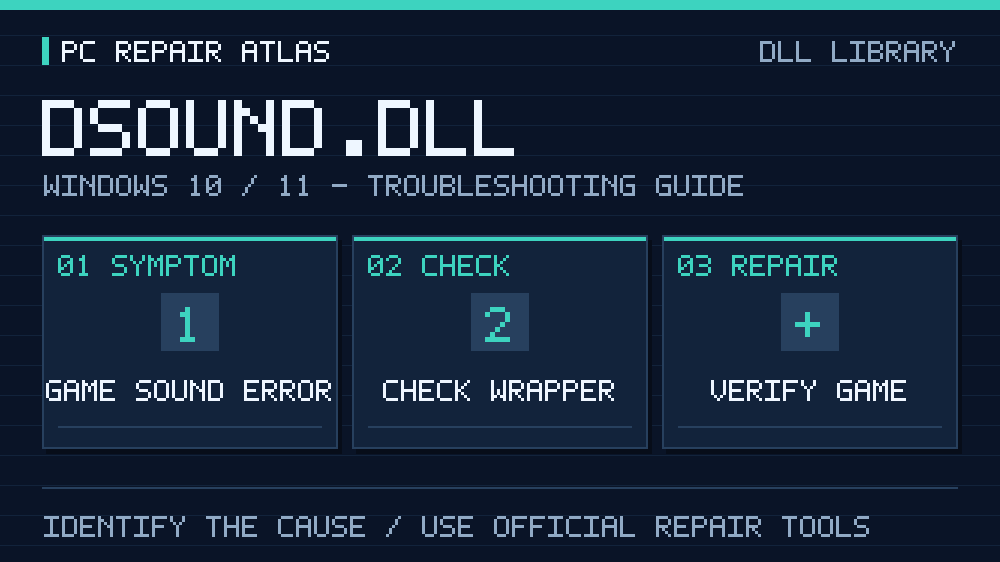
When a DSOUND.dll error appears while starting a classic game or playing audio in older software, start with the exact message. Windows can report a missing library, an incompatible binary, a missing entry point or an application crash. Replacing a DLL without identifying the type of failure may introduce new problems.
What is DSOUND.dll?
DSOUND provides legacy DirectSound interfaces used by older multimedia software and games. A game can also include an application-local compatibility wrapper with this name.
1. Collect evidence before changing files
Check whether the issue is a startup error, missing audio or a crash during audio playback. Review the module path. If a recently installed mod supplied a DSOUND wrapper, consult the mod's documented removal instructions or use game-file verification to restore the original installation.
For an application crash, press Windows + R, type perfmon /rel and select the red failure entry in Reliability Monitor. Save the application name, version, faulting module path and exception code. Check whether a recent software or driver installation coincides with the start of the problem. Test a second unrelated application where practical; one reproducible app failure calls for a different approach from widespread Windows instability.
2. Repair the appropriate component
Test the default Windows output device and verify the game files. Update the supported audio driver if other programs also have sound problems. Try supported in-game audio settings and remove optional audio modifications one at a time; do not replace the Windows system copy.
Save open work and back up important files before installing or removing software. Make one supported change at a time, then repeat the original operation. Obtain installers from the official publisher or trusted device manufacturer. If the computer is managed by an organization, leave restricted settings and permissions to its IT administrator.
3. Check Windows system files when justified
If multiple Windows components or unrelated applications are failing, or Windows explicitly reports protected-file corruption, open Terminal or Command Prompt as administrator. Run DISM first and wait until it completes, then run SFC.
DISM.exe /Online /Cleanup-image /Restorehealth
sfc /scannow
These tools address the Windows component store and protected Windows files, respectively. Restart if repairs were made, and keep the output if a scan cannot complete. If both scans are clean, return to the affected application, driver or runtime instead of repeatedly repairing Windows. Do not obtain individual DLLs from untrusted file download sites.
Confirm the fix
Start the game and test sound effects, music and any previously failing audio feature; confirm other applications retain audio output.
Frequently asked questions
Can I replace DSOUND.dll manually? Avoid doing so. Dependencies and versions need to match. Use the official installer, Windows servicing or the supported repair procedure for the component.
Does a DLL error prove that the registry is damaged? No. A registry cleaner cannot replace a missing runtime or identify an application's programming fault. Use the actual error and targeted repair steps.
What should I do if it comes back? Record the new failure details and compare them with the original. If the same application still fails, contact its publisher with the exact Windows build, application version and crash details. If unrelated programs begin failing, consider a broader stability check.
Official documentation and related repair guides
Official component documentation · Microsoft system file repair · Related PC Repair Atlas troubleshooting guide · Bad Image troubleshooting · PC Repair Atlas